
Sustainability Structure
SCGP Corporate Governance Structure
SCGP has established a corporate governance structure as a part of a robust governance system to enhance management efficiency and in support of check and balance. The company has also implemented policies that clearly define the division of power, duties, decision-making processes, and procedures to ensure that the company’s operations across all sectors adhere to corporate governance principles, function efficiently, and align with the established goals. The Board of Directors plays a key role in reinforcing and upholding corporate governance.
The Meeting of the Board of Directors held on November 26, 2024, passed a resolution to establish one additional sub-committee, namely the Risk Oversight Committee, effective from January 1, 2025, onwards.
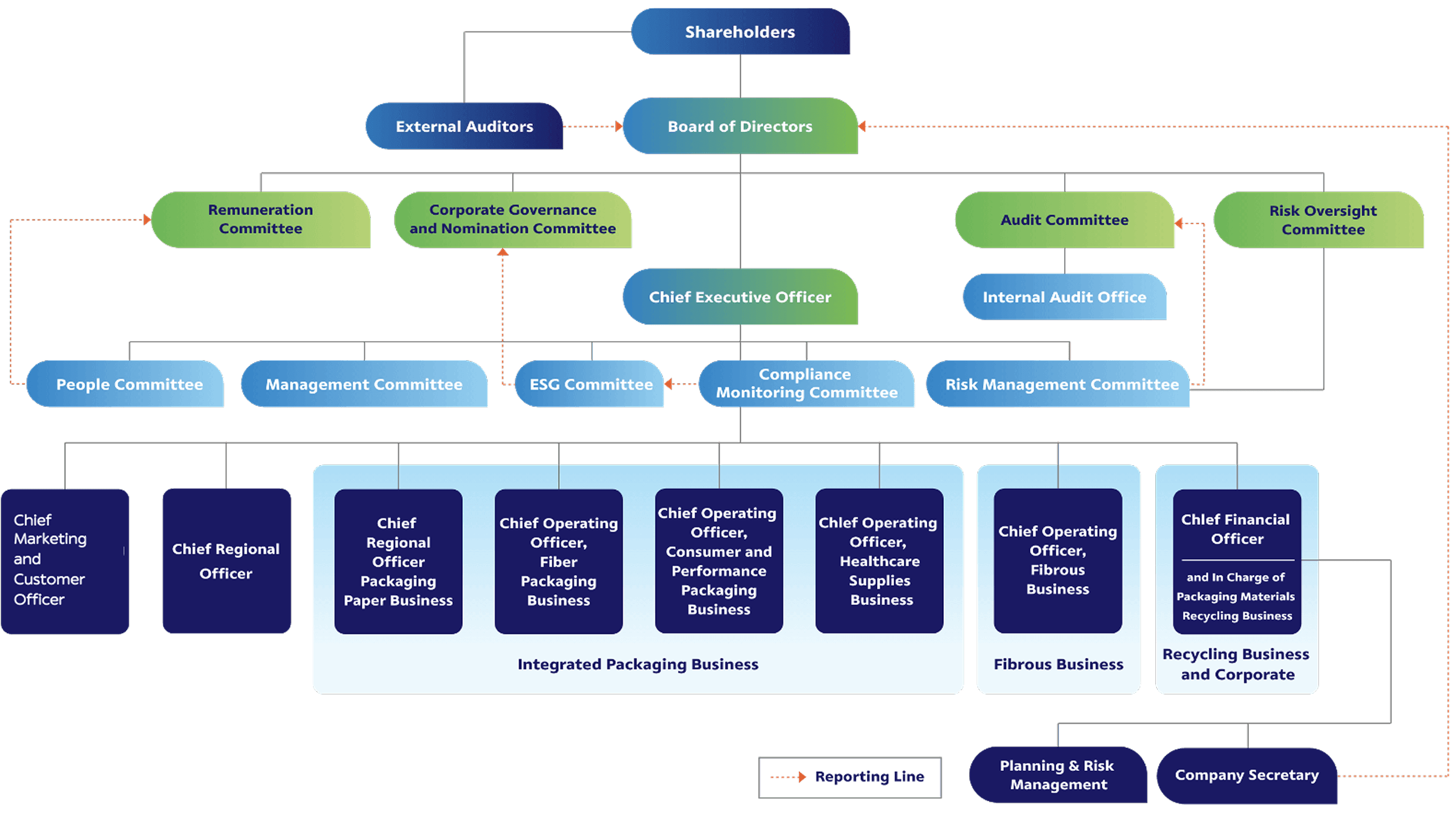
The Board of Directors has four committees:
- The Corporate Governance and Nomination Committee : Define the Company’s corporate governance guidelines, policies, and structure, and propose them to the Board of Directors for consideration and approval; monitor the performance of the Board of Directors and the Management to ensure compliance with principles of corporate governance; and promote the development of directors and committee members by preparing plans to enhance their knowledge and essential skills with the aim to ensure they understand their roles and duties, the nature of business, economic trends, technology, as well as laws and regulations related to the Company and its subsidiaries.
- The Remuneration Committee : Consider the remuneration structure for the Board of Directors and its subcommittees by benchmarking against leading companies listed on the stock market and operating in the same industry. The structure is designed to ensure that remuneration offered by SCGP is appropriate, aligns with job responsibilities and performance, and serves as a key incentive to drive optimal performance. All considerations are primarily based on evaluations against Key Performance Indicators (KPIs).
- The Audit Committee : Oversee risk management, internal control, compliance, reporting and financial reporting system, as well as transactions that may involve conflict of interest; supervise to ensure that the effective risk management, internal control, internal audit and anticorruption measures are in place; monitor Environmental, Social and Governance (ESG) issues, consider and nominate the Auditor; approve the Audit Office’s plans; and endorse the appointment, performance assessment, and transfer of audit executives.
- The Risk Oversight Committee : Oversee and provide counseling related to risk management structure, policies, and processes. It is also responsible for promoting and driving continuous development of risk management system organization-wide.
Management level
At SCGP, there are two key administrative committees related to Sustainability-related Risks and Opportunities. The first, the ESG Committee, has the duty to establish as well as supervise policies for compliance with UN Sustainable Development Goals (UN-SDGs); and ensure ESG guidelines align with stakeholder expectations so as to set good ESG examples at both regional and international levels. It seeks to promote, communicate and foster ESG mindset among staffs and business partners in pursuit of ESG goals; and integrate Double Materiality into business strategies to create value and sustainability for not just SCGP but also the public. The second, the Risk Management Committee, is mainly responsible for reporting risks and risk management to the Audit Committee and the Risk Oversight Committee.
The ESG Committee and the Risk Management Committee work together systematically in managing material Sustainability related Risks and Opportunities. The management cover key focuses as follows:
- Operating businesses with environmental responsibility in pursuit of Net Zero greenhouse gas emissions.
- Conducting businesses based on Circular Economy to increase resource efficiency and decrease waste across value chain.
- Operating businesses with customer and consumer centricity to continuously upgrade value and customer satisfaction.
- Conducting businesses without compromising the health and safety of employees and suppliers to ensure safe and sustainable work environment.
- Establishing a robust corporate governance system to ensure transparency, accountability, and build trust among all stakeholder groups.

SCGP ESG Committee
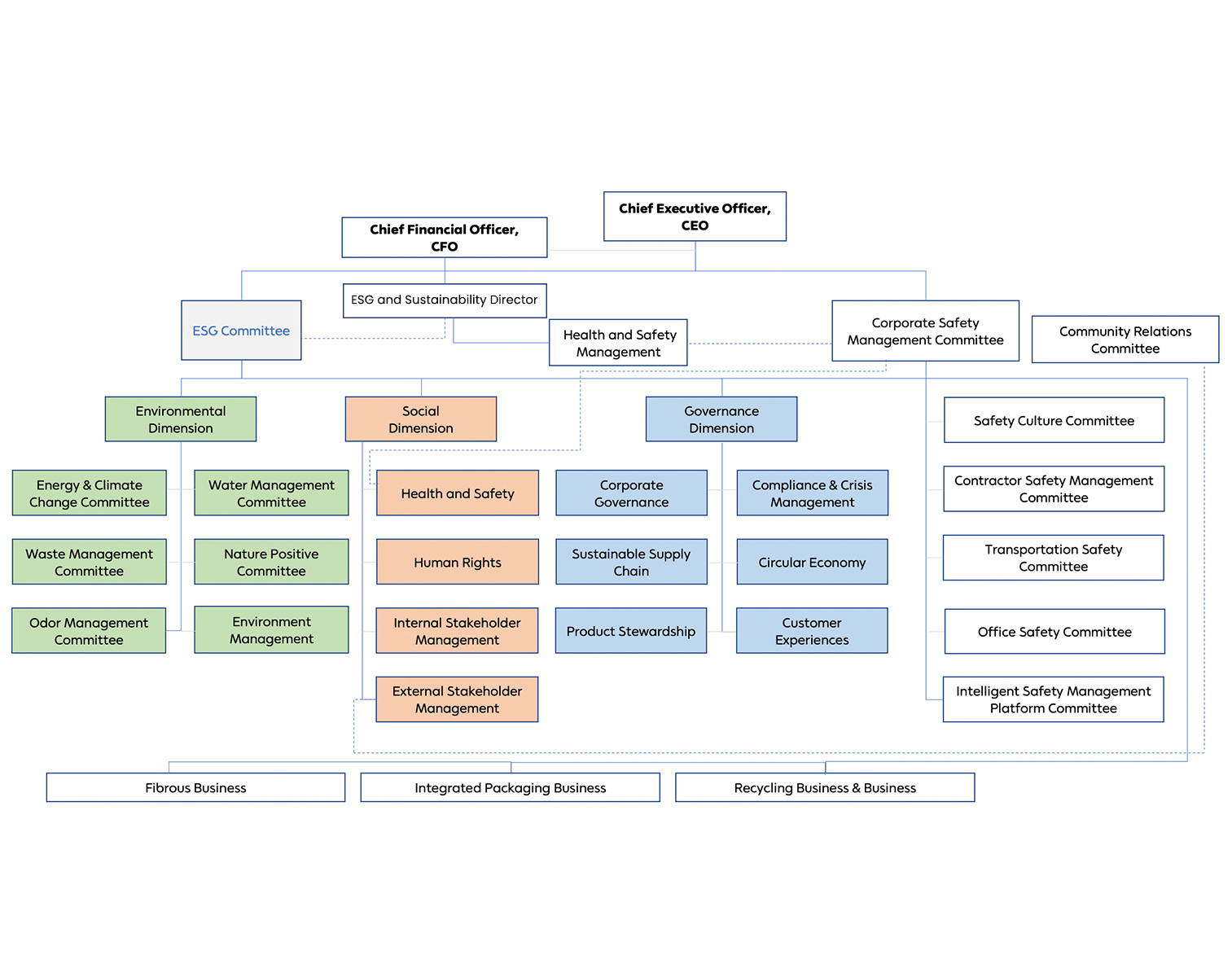
Responsibilities of ESG Committee as follows:
In additional, SCGP has designated an ESG and Sustainability Director, responsible for overseeing and implementing the company’s ESG strategy and initiatives. This role develops ESG policies aligned with corporate direction, drives SCGP to become a global ESG leader, coordinates with Business Units to ensure effective implementation of ESG practices, and promotes ESG awareness among employees. The Director also manages relationships with internal and external stakeholders, monitors ESG performance across the organization, and liaises with government agencies, industry associations, and external organizations to advance ESG initiatives.
Key deliverables include monitoring global ESG regulations and trends, driving ESG processes for maximum organizational benefit, leading change management to embed the ESG Way within business operations and employee practices, ensuring integrity in external engagements, and managing the company’s ESG branding and stakeholder relations. The ESG and Sustainability Director reports to the ESG Committee, CFO, CEO, Corporate Governance and Nomination Committee, and Audit Committee